Jewelry bags are more than storage – they carry your brand values. Cotton and flannel are two of the most popular eco‑friendly materials. Both are soft, reusable, and biodegradable. But for B2B buyers choosing between cotton jewelry bags wholesale and flannel jewelry bags wholesale, which one is right for your silver or mirror‑finish products? This guide compares raw materials, fabric weight, scratch resistance, logo customization, cost, washability, and reusability. A decision tree helps you select the best jewelry dust bags wholesale solution for your ESG brand.
1. Raw Material Source & Biodegradability
- Cotton: Natural plant fiber from cotton plants. Conventional cotton uses significant water and pesticides, but organic cotton (GOTS certified) is far more eco‑friendly. Cotton bags biodegrade in industrial composting within 3‑6 months and even in home soil over a longer period. Zero microplastic risk.
- Flannel: Usually made from cotton or wool. The most common “cotton flannel” uses cotton yarns that are brushed to create a soft, fuzzy surface. Raw material is still natural cotton, so biodegradability is the same as cotton. Some budget flannel may blend up to 10% polyester, which reduces degradation speed – always check the composition.
ESG note: Both are natural fibers, far superior to synthetic bags. For the highest environmental standard, choose GOTS‑certified organic cotton bags (plain or flannel).
2. Fabric Weight & Thickness – Impact on Protection
- Cotton: Typical weight 120–200 gsm. 120 gsm is thin, suitable for lightweight jewelry; 180–200 gsm is thicker and more tear‑resistant. Heavier cotton provides better cushioning against external pressure.
- Flannel: Weight 160–250 gsm. Due to the brushed surface, flannel feels thicker and plusher than cotton of the same weight. The nap acts as an extra buffer layer, offering superior protection against sharp edges.
Real case: A silver jewelry brand initially used 140 gsm cotton bags. Customers reported fine scratches on the silver pieces. After switching to 220 gsm flannel bags, the nap absorbed vibrations and scratch complaints dropped by 85%.
3. Scratch Resistance (Especially for Silver & Mirror‑Finish Products)
Silver and mirror‑polished products are extremely sensitive to inner surface friction.
- Cotton: Plain weave with a relatively smooth surface. However, if the fabric contains sizing or is not fully washed, it can still cause micro‑abrasion. Choose “washed cotton” or “brushed cotton” for extra softness.
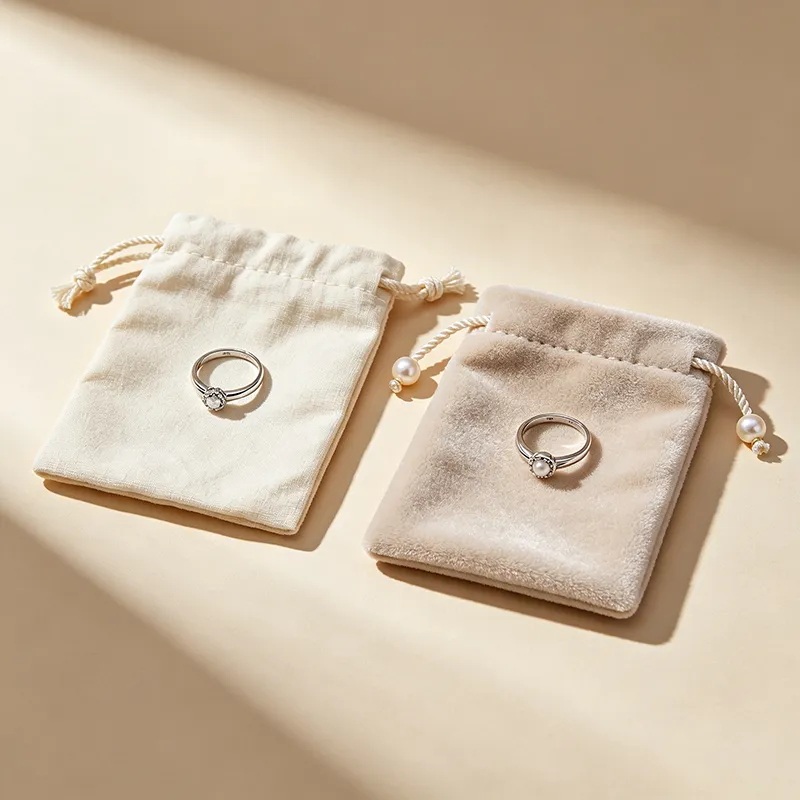
- Flannel: Dense nap surface feels like peach skin – widely recognized as the “scratch‑resistance champion.” When silver jewelry is placed inside, the nap supports and wraps the piece, preventing almost any sliding.
Real case: A high‑end mirror‑finish stainless steel jewelry brand originally used ordinary cotton bags, which left hazy scratches on the product surface. After switching to heavy‑weight flannel bags from a jewelry dust bags wholesale supplier, the problem was completely solved and customer repurchase rates increased.
4. Custom Logo Methods
| Technique | Cotton | Flannel | Effect & Characteristics | MOQ |
| Screen printing | ✅ Suitable (use eco‑friendly water‑based ink) | ⚠️ Fuzzy surface blurs edges, not recommended | Vibrant colors, low cost | 500+ |
| Foil stamping | ✅ Suitable (needs flat fabric) | ❌ Nap prevents smooth adhesion, prone to peeling | Premium metallic shine | 1000+ |
| Woven label | ✅ Suitable | ✅ Suitable (sewn or heat‑sealed) | 3D texture, wash‑resistant | 2000+ |
| Embroidery | ✅ Suitable (thicker cotton better) | ⚠️ Nap can hide thread details | Luxury feel, heavier | 500+ |
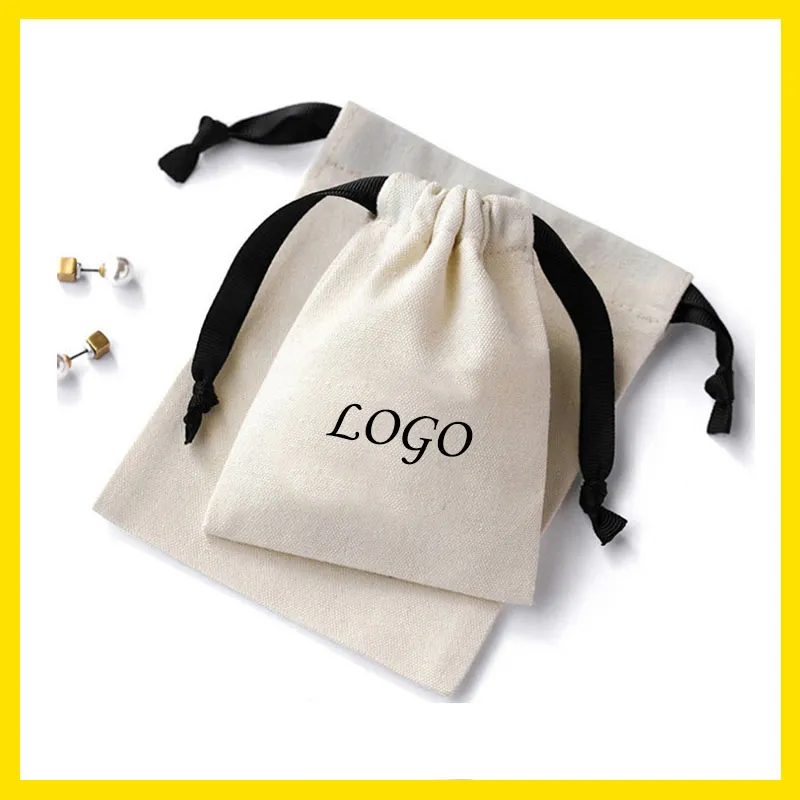
Best practice: For flannel bags, a woven label (sewn inside or outside the bag mouth) is recommended. For cotton bags, screen printing or foil stamping offers good value.
5. Cost & MOQ Differences
- Cotton: Standard cotton bag cost is lower (bulk $0.30–0.80/piece); organic cotton is 20‑30% higher. MOQ for custom logos is usually 1,000 pieces.
- Flannel: Brushing process adds 15‑25% to fabric cost compared to same‑weight cotton. Sewing requires extra care. Bulk cost approx. $0.50–1.20/piece. MOQ typically 2,000 pieces.
Sourcing tip: For promotional giveaways or short‑term events, cotton is more economical. For premium gifts or long‑term brand image, flannel offers higher perceived value.
6. Washability & Reusability
- Cotton: Machine washable or hand wash. Shrinks slightly (3‑5%) after multiple washes but becomes softer. Encourages consumers to reuse as everyday storage pouches.
- Flannel: Hand wash or gentle machine cycle recommended. The nap may compact slightly with friction but can be revived by brushing with a soft brush after drying. Not recommended for more than 20 wash cycles.
ESG bonus: Both materials are reusable, replacing single‑use paper boxes or plastic bags – supporting your brand’s plastic‑reduction commitment.
Comparison Summary Table
| Aspect | Cotton | Flannel |
| Raw material | Natural cotton fiber | Cotton or cotton blend (brushed) |
| Biodegradability | Fully biodegradable (organic cotton faster) | Pure cotton flannel fully biodegradable |
| Weight range (gsm) | 120–200 | 160–250 |
| Scratch resistance | Good (better with washed/brushed cotton) | Excellent (nap cushions) |
| Recommended logo method | Screen print, foil stamp, woven label | Woven label (preferred), embroidery |
| Bulk cost (USD/piece) | 0.30–0.80 | 0.50–1.20 |
| MOQ for custom logos | 1,000 | 2,000 |
| Washability | Machine wash, gets softer | Hand wash, needs gentle brushing |
Selection Decision Tree
Answer these three questions to choose the right material:
- Is budget your primary concern?
- Yes → Cotton (lower cost)
- No → go to question 2
- Does your product have a high‑gloss mirror finish or is it silver (very easy to scratch)?
- Yes → Flannel (nap provides superior scratch protection)
- No → go to question 3
- Tactile preference?
- Dry, crisp feel → Cotton
- Warm, plush, luxurious feel → Flannel
Additional consideration: For brands that emphasize extreme eco‑credentials (e.g., zero‑plastic certification), choose GOTS organic cotton (plain or flannel). For a premium unboxing moment, flannel bags are unmatched.
Conclusion
Both cotton and flannel jewelry bags are eco‑friendly, soft, and reusable. Cotton offers better value and flexible customization; flannel excels in scratch protection and luxurious feel. As a professional supplier of cotton jewelry bags wholesale and flannel jewelry bags wholesale, we can recommend the right fabric weight, logo technique, and packaging solution based on your product characteristics.
Recommended Further Reading:

 We like to do design according to all the customers' requirements, or offer them our new designs. With strong OEM/ODM capabilities, we can fill your sourcing demands.