For jewelry brands, a box is far more than a container — it is a carrier of brand value. In the competitive luxury market, choosing the right surface finishing technique can instantly transform a standard custom printed jewelry box into a coveted piece of art. As a printing process specialist, I will analyze three techniques that best highlight your jewelry packaging with logo: foil stamping, embossing, and spot UV. These methods help your jewelry brand increase product premium and unboxing experience through thoughtful packaging.
1. Foil Stamping – The Luxurious Statement of Metallic Shine
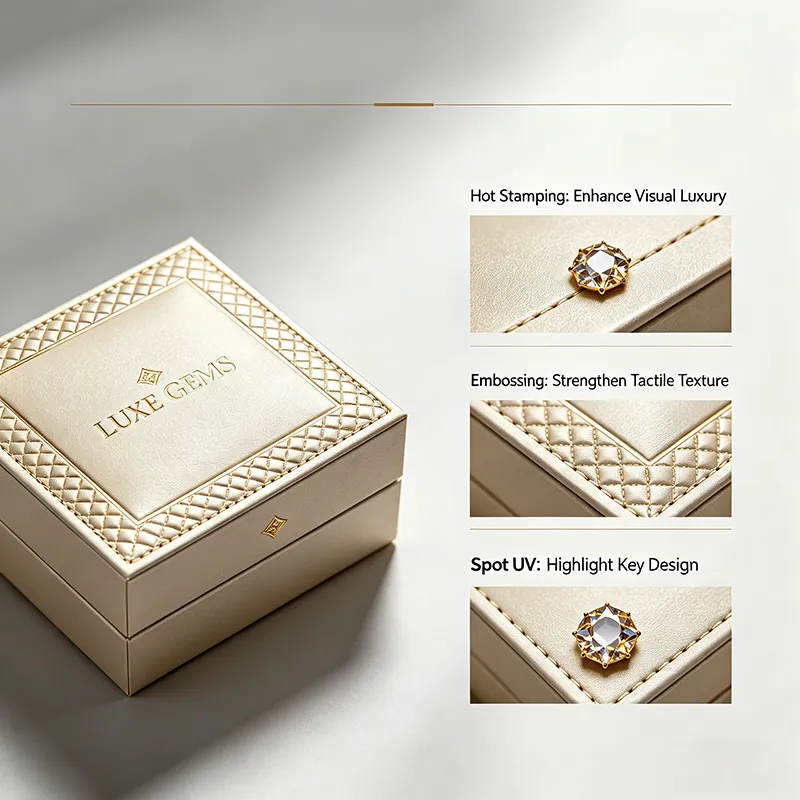
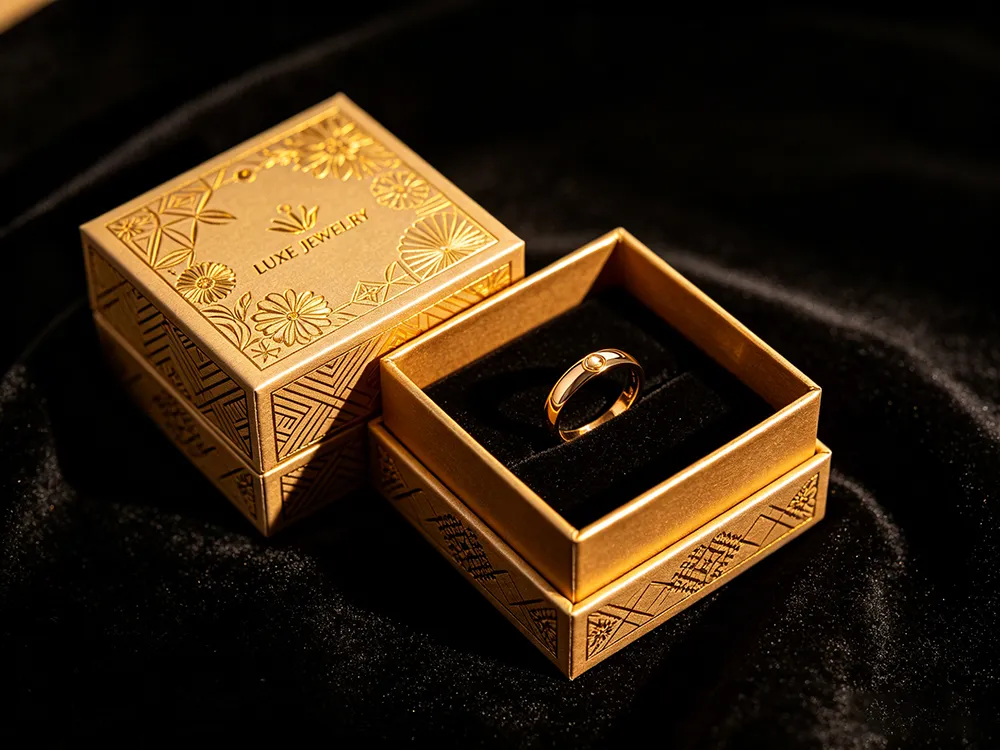
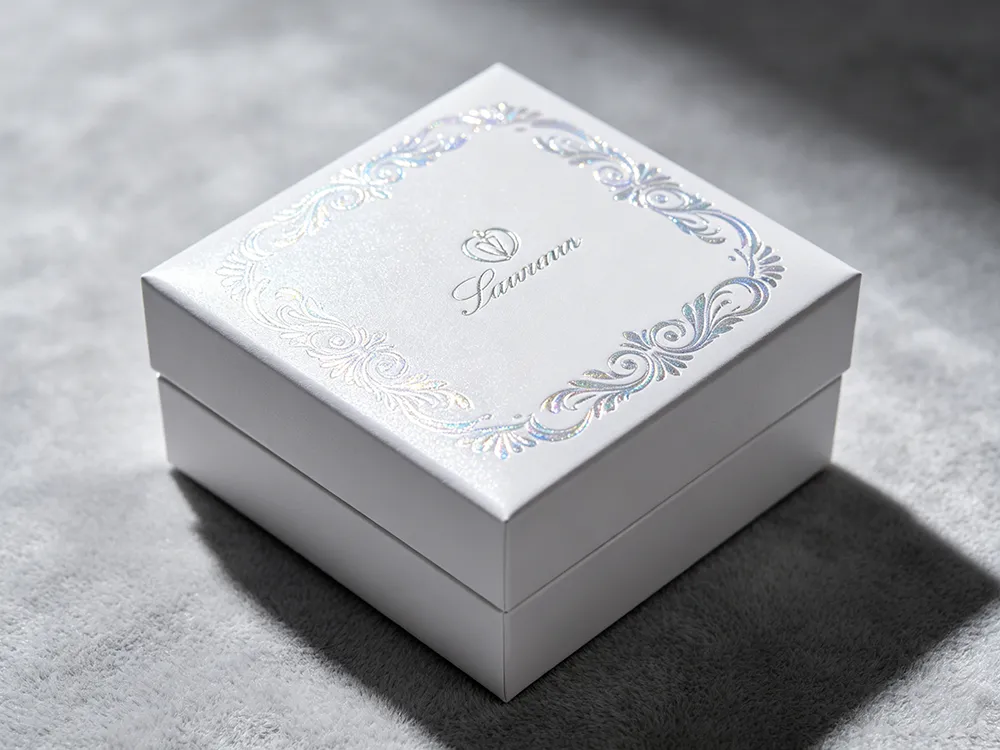
Foil stamping transfers metallic foil onto paper surfaces via heat and pressure. It offers multiple effects including bright gold, matte gold, rose gold, and holographic. It is especially suitable for logos and text, with moderate cost, and instantly delivers a sense of opulence.
Rigid Box Suitability: Rigid boxes (chipboard wrapped with coated paper) have a smooth, flat surface, making them ideal for foil stamping. The coating on the coated paper locks the foil firmly, offering better adhesion than many art papers. The lamination pressure during rigid box production does not affect the foil finish, making foil stamping the safest and most mature decorative technique for rigid boxes.
Factory Practical Tip: Foil stamping works best on dark papers (e.g., black or deep blue cardstock). Light-colored papers require high-opacity foil. After receiving samples, rub the foiled area with your finger 10 times — slight flaking is normal, but large-area peeling indicates poor adhesion.
2. Embossing/Debossing – The Carver of Tactile Memory
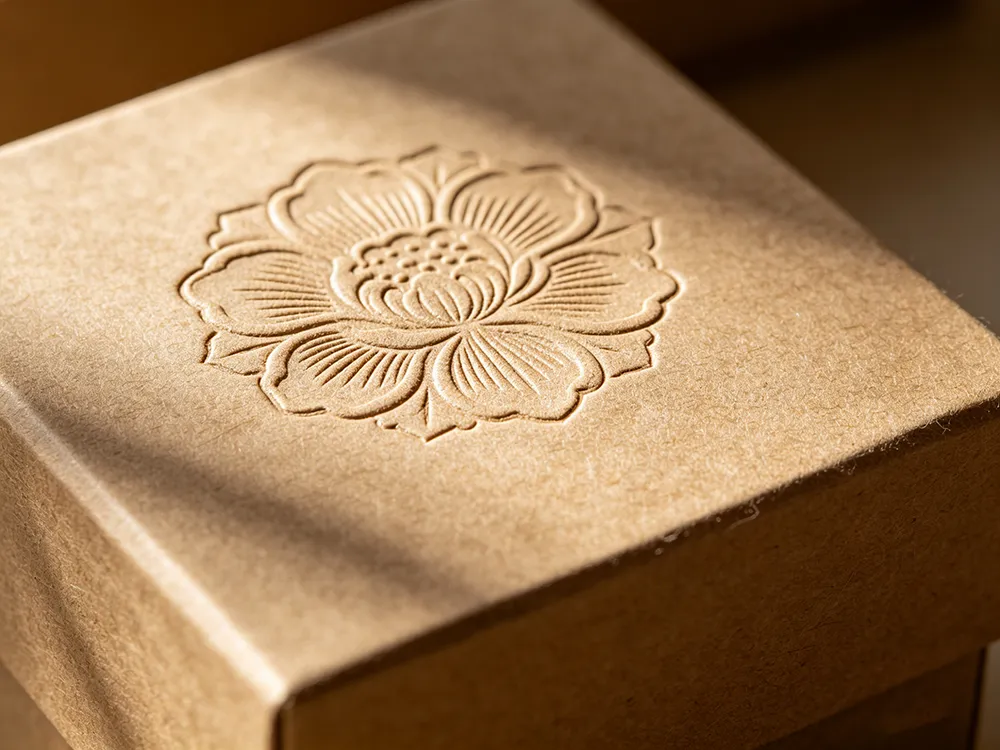
Without using ink, embossing (raised) and debossing (recessed) create three-dimensional patterns on paper using a die. Embossing makes logos pop off the surface, ideal for brands seeking a bold statement; debossing offers an understated, refined texture and is more environmentally friendly than foil stamping (no chemical foil residue).
Applicability: Only suitable for single-layer thick paperboard (≥300 gsm recommended), such as folding cartons, cards, and hang tags. Thicker paper produces deeper, more defined embossing.
Important Limitation – Rigid Boxes Are NOT Suitable for Embossing: The production process for rigid boxes involves first embossing the coated paper, then laminating it onto chipboard. However, the lamination process applies pressure to bond the paper and chipboard — and that pressure will flatten any pre-made embossing. If you attempt embossing after lamination, two problems arise: first, the finished box shape is difficult to feed into embossing equipment; second, the embossing pressure can deform or crack the chipboard. Therefore, rigid boxes are not suitable for embossing/debossing.
Alternatives for Rigid Boxes: To achieve a similar dimensional effect on rigid boxes, consider:
- Using embossing-mimic printed patterns (e.g., gradient shadows to simulate depth)
- Combining foil stamping + spot UV to create contrast and visual layering
- Using textured specialty papers (e.g., linen, striped, or felt-mark papers) as the wrapping paper instead of standard coated paper
3. Spot UV – The Modernist of Gloss-Matte Contrast
Spot UV applies a high-gloss UV varnish to specific areas of a printed piece, creating a sharp contrast between gloss and matte surfaces. Cost is lower than foil stamping but higher than standard printing. It is particularly suitable for geometric patterns, tech-forward brands, or as decorative lines.
Rigid Box Suitability: For rigid boxes, applying spot UV over a matte lamination creates a “hidden‑to‑visible” magic effect — the uncoated areas remain an elegant matte black, while the UV areas reflect light like a mirror. This gloss‑matte contrast looks especially premium on rigid boxes and costs about half of foil stamping. Lamination pressure does not affect spot UV results.
Applicability: Paper only (best with matte lamination). Not suitable for fabric packaging.
Comparison: Plate Fees, Unit Cost, Efficiency, and Environmental Impact
| Comparison Dimension | Foil Stamping | Embossing | Spot UV |
|---|
| Plate Fee | Medium (~$50-150 per die) | High (~$100-300 per die) | Low (~$20-60 per film/digital plate) |
| Unit Cost (1,000 pcs) | Medium ($0.3-0.8) | Medium ($0.2-0.6) | Lower ($0.1-0.4) |
| Production Speed | Fast (50-80 sheets/min) | Slow (needs precise registration) | Fastest (digital UV machine) |
| Applicable Substrates | Paper, fabric, leather | Single-layer thick paperboard (≥300gsm) only | Paper only (with matte lamination) |
| Environmental Friendliness | Medium (foil is metal+plastic) | High (no consumables) | Medium (UV varnish requires curing) |
| Visual Effect | Metallic shine | 3D tactile relief | Gloss/matte contrast |
Real Case: Foil + Spot UV Turns a Ring Box into Social Currency
An independent designer’s ring box used a “foil stamping logo + spot UV decorative lines” combination. The box surface was matte black specialty paper, with the logo in rose gold foil stamping to highlight the main visual. Several spot UV fine lines were added along the edges, creating a delicate refraction under light. Embossing was originally planned, but because the brand chose a rigid box structure, they used embossing-mimic printed patterns instead — the final result was equally outstanding.
Result: The packaging increased the product’s retail price by 20% and generated a wave of “unboxing” posts on Instagram, bringing additional organic traffic to the brand.
Process Selection Decision Tree: By Budget, Substrate, and Brand Positioning
By Budget Tier
- Low budget (under $0.20 per unit): Spot UV only (on paper) or no decoration. Suitable for fashion accessories, promotional packaging.
- Medium budget ($0.3-0.8 per unit): Foil stamping logo + spot UV background lines. Suitable for mid-range gift jewelry, e‑commerce brands.
- High budget (above $0.8 per unit): Foil stamping + spot UV + embossing-mimic printed patterns (for rigid boxes), or foil stamping + embossing (for single-layer paperboard boxes). Suitable for luxury jewelry, engagement rings, limited edition gift boxes.
By Substrate Type
| Substrate Type | Foil Stamping | Embossing | Spot UV |
|---|
| Rigid Box (chipboard + coated paper) | ✅ Highly recommended | ❌ Not suitable (lamination flattens it) | ✅ Suitable (with matte lamination first) |
| Single-layer paperboard box (folding carton, ≥300gsm) | ✅ Suitable | ✅ Suitable | ✅ Suitable |
| Fabric packaging (cotton/polyester/velvet) | ✅ Suitable (special foil required) | ❌ Not suitable | ❌ Not suitable |
By Brand Positioning
- Minimalist / Tech-forward: Spot UV alone + matte lamination for a “hide‑and‑reveal” effect.
- Vintage / Heritage: Foil stamping (matte gold or bronze) + deep debossing (only for single-layer paperboard boxes), paired with dark paper.
- Natural / Eco-friendly: Embossing only (no ink or foil, only for single-layer paperboard boxes) — the most sustainable and premium tactile experience.
Exclusive Recommendations for Rigid Boxes
| Brand Positioning | Recommended Process Combination | Estimated Unit Cost Increase |
|---|
| Affordable Luxury / Fashion | Matte lamination + spot UV (logo) | +$0.15 |
| Classic Luxury | Matte lamination + foil stamping logo | +$0.40 |
| Top-tier Custom | Matte lamination + foil stamping logo + spot UV decorative lines + embossing-mimic printed patterns | +$0.65 |
Choosing the right finishing combination can make your jewelry packaging with logo the most powerful silent salesperson for your brand. If you are still unsure which solution best fits your product, please send your design files to us — we will provide process advice and sampling service.
Recommended Further Reading:
 We like to do design according to all the customers' requirements, or offer them our new designs. With strong OEM/ODM capabilities, we can fill your sourcing demands.