The choice of material for jewelry packaging is essentially a brand's balancing act between protection, aesthetics, and durability. In recent years, a new synthetic material called "Microfiber" has been rapidly gaining traction in the jewelry packaging industry, increasingly replacing traditional velvet as the preferred choice for flap pouches, drawstring bags, and rigid box lamination. Whether you are sourcing jewelry pouches wholesale, exploring custom jewelry pouches wholesale, or evaluating overall jewelry packaging supplies, this article analyzes microfiber's material composition, performance advantages, and a comprehensive comparison with velvet, explaining why it is becoming the go-to option for more and more brands.
1. What is Microfiber?
Microfiber is a microfiber synthetic leather whose microstructure achieves a high degree of approximation to natural leather through biomimetic design. It is composed of sea-island ultra-fine fibers (typically nylon and polyester bicomponent) compounded with polyurethane (PU) resin, then processed through buffing, dyeing, and other finishing treatments to create a fine, suede-like texture on the surface. The ultra-fine fibers typically have a diameter of less than 5 microns, creating a peach-skin-like texture that feels soft and smooth to the touch[reference:0].
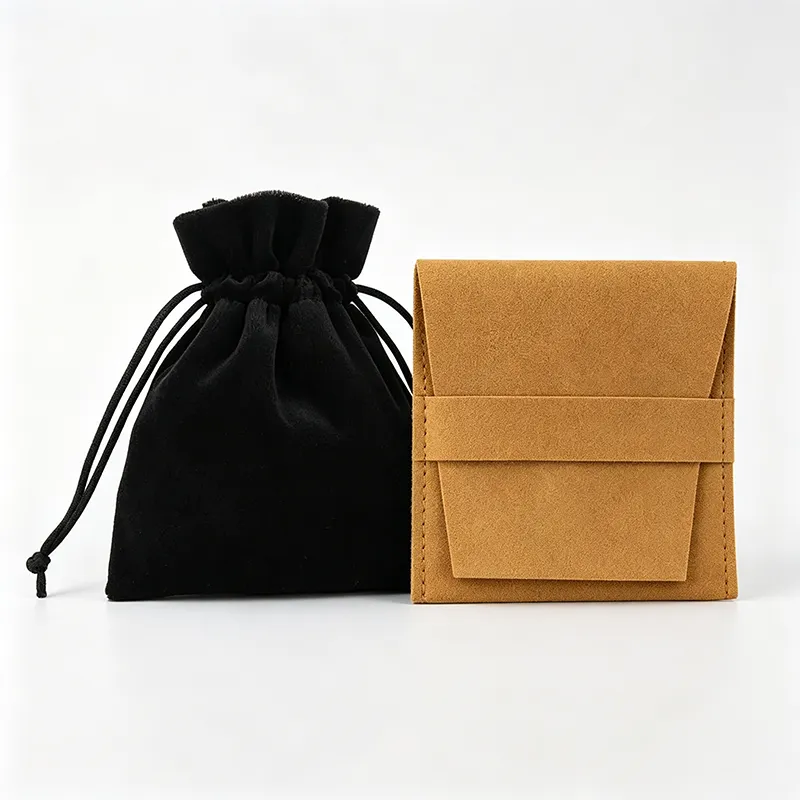
Microfiber features a three-dimensional network fiber structure, with tensile strength and tear strength up to three times that of natural cowhide[reference:1]. It is also wear-resistant, cold-resistant, breathable, and aging-resistant. Its feel is close to genuine leather, but it is more durable, easier to clean, and more cost-controllable than leather – typically priced at only one-third to one-half the cost of genuine leather[reference:2]. In the jewelry packaging sector, microfiber is primarily used for flap pouches, drawstring bags, and rigid box lamination.
2. Core Performance Advantages of Microfiber
Refined hand feel: Microfiber has a suede-like texture that feels soft and warm, close to genuine leather but with more uniform consistency. Its high-density structure can achieve a surface density over 50 times that of velvet.
Wear resistance and tear strength: The ultra-fine fiber structure gives microfiber far superior abrasion resistance compared to natural leather and velvet, withstanding frequent opening, closing, and handling[reference:3]. For jewelry packaging that requires repeated use, this advantage is particularly significant.
Water and stain resistance: The surface is treated with water-repellent coating, allowing light stains to be wiped clean with a damp cloth—low maintenance cost.
Color stability: High colorfastness, resistant to fading, with a rich selection of colors.
Eco-friendliness: Some microfiber products use recycled fibers or water-based polyurethane, aligning with sustainability trends[reference:4].
3. Microfiber vs. Traditional Velvet: A Comprehensive Comparison
| Comparison Dimension | Microfiber | Traditional Velvet |
|---|
| Hand Feel | Refined suede, close to genuine leather | Soft, strong pile feel |
| Wear Resistance | High, wear-resistant and tear-resistant | Medium, pile easily wears and flattens |
| Water & Stain Resistance | Water-repellent, easy to clean | Easily attracts dust, difficult to clean |
| Color Performance | High colorfastness, stable | Rich color selection but prone to fading |
| Thickness & Stiffness | Thin yet stiff, clean edges | Thicker, edges prone to fraying |
| Customization Process Compatibility | Clear foil stamping and embossing results | Good foil stamping, limited screen printing precision |
| Durability | Retains shape over long-term use | Pile flattens with extended use |
| Cost | Medium | Low-medium to medium-high |
| Brand Perception | Modern, refined, premium | Classic, luxurious, warm |
From a technical standpoint, microfiber outperforms traditional velvet in wear resistance, water and stain resistance, color stability, and customization process compatibility. The dense structure of ultra-fine fibers enables clearer embossed logos and more durable foil stamping results.
4. Why is Microfiber Replacing Traditional Velvet?
Durability requirements: Jewelry is frequently handled and stored. The pile on velvet pouches easily wears and flattens over time, affecting appearance and service life. Microfiber is more wear-resistant and maintains its texture even with long-term use[reference:5].
Ease of cleaning and maintenance: Velvet easily attracts dust and is difficult to clean. Microfiber is water-repellent and easy to wipe clean. Studies have shown that microfiber pouches with certified anti-tarnish linings can reduce tarnishing rates by up to 40% under high-humidity shipping conditions[reference:6].
Brand image upgrade: Microfiber's suede texture conveys a "modern premium feel" that aligns better with current accessible luxury brand aesthetics. Velvet leans toward "classic tradition," while microfiber leans toward "modern refinement." For brands that want "the jewelry to speak for itself," microfiber's understated texture allows metal and gemstones to stand out.
Cost control: Microfiber offers performance close to genuine leather but at only one-third to one-half the cost, delivering superior value for money[reference:7].
Logistics efficiency: From a logistics perspective, microfiber is thinner and lighter. This allows you to store approximately 30% more inventory in the same space compared to bulky velvet bags[reference:8].
5. Customization Process Compatibility of Microfiber
Foil stamping / foil printing: Microfiber's flat, fine surface delivers clear foil stamping results with good adhesion, suitable for logos and brand marks.
Debossing / embossing: Microfiber has moderate thickness and stiffness, producing three-dimensional and durable embossing effects. Precision debossing allows logos to remain intact even after 500+ uses, outperforming the industry-standard 300-use benchmark[reference:9].
Screen printing: Some microfiber types support fine screen printing, suitable for multi-color designs.
Laser engraving: Some microfiber types support laser engraving, enabling inkless fine marking.
6. Typical Applications of Microfiber Flap Pouches
- Retail packaging for rings, earrings, necklaces, and other jewelry
- Storage and display pouches for watches
- Protective pouches for eyewear and sunglasses
- Packaging for premium stationery and gift accessories
- Cosmetic samples and travel kits
7. Microfiber Selection Recommendations
Microfiber is suitable for brands pursuing modern premium aesthetics, durability, and easy maintenance.
Velvet remains suitable for brands pursuing classic warmth and ultra-soft tactile experiences.
Both materials have their strengths. The key lies in matching brand positioning with usage scenarios. If you need sample comparisons or professional material selection advice, please feel free to contact us.


 We like to do design according to all the customers' requirements, or offer them our new designs. With strong OEM/ODM capabilities, we can fill your sourcing demands.