Velvet (pile fabric) is a premium choice for drawstring bags due to its soft touch, luxurious sheen, and excellent product protection. However, the market is flooded with confusing names – velveteen, flannel, Korean velvet, short‑pile velvet, chenille – making it easy for buyers to choose the wrong material, leading to budget overruns or brand image damage. This guide serves as your entry‑level overview for velvet drawstring bags, providing a clear classification system and a practical decision framework. Whether you are sourcing velvet drawstring bag, fabric for drawstring pouch, or jewelry packaging supplies, this article will help you quickly find the right direction.
Core Selection Metrics for Velvet Fabrics
Four technical parameters determine the quality and suitability of velvet. Understanding these will allow you to read supplier spec sheets and match them to your product needs.
Weight (GSM)
GSM (grams per square meter) directly affects the bag’s stiffness and durability.
- 200–300 GSM: Light and soft, ideal for lightweight items (single silver jewelry, small pendants). Drapes well, lower cost.
- 300–450 GSM: Thick and structured, suitable for heavier jewelry (bracelets, necklace sets). Holds shape, good crush resistance.
- Above 450 GSM: Rarely used for drawstring bags (more for home décor). For such high weight, consider canvas instead.
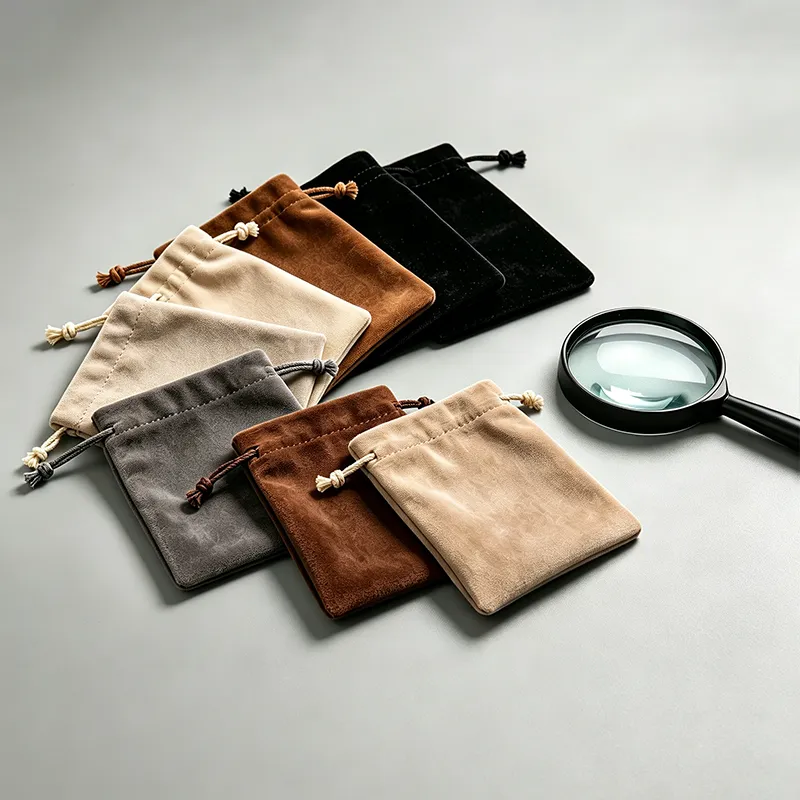
Tip: Before bulk order, ask for 300 GSM and 400 GSM sample bags to feel the difference in stiffness.
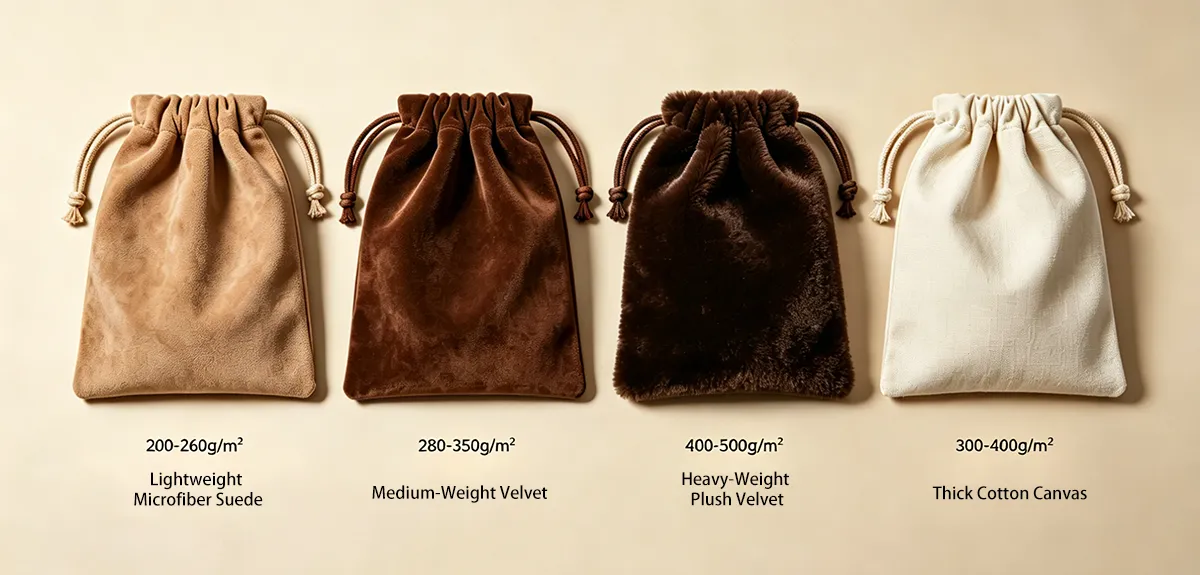
Velvet weight: light, medium, heavy, thick
Backing Structure
The backing is the base that holds the pile. It determines elasticity, abrasion resistance, and sewing difficulty.
- Knitted backing: Stretchy and soft, good for irregular shapes or close‑fit packaging. However, edges curl during sewing – requires skilled workers.
- Woven backing: Stable, stiff, and abrasion‑resistant. Ideal for bags that must keep shape over time. Better for printing and foil stamping.
- Non‑woven backing: Very low cost but poor pile adhesion, prone to shedding – not recommended for jewelry drawstring bags.
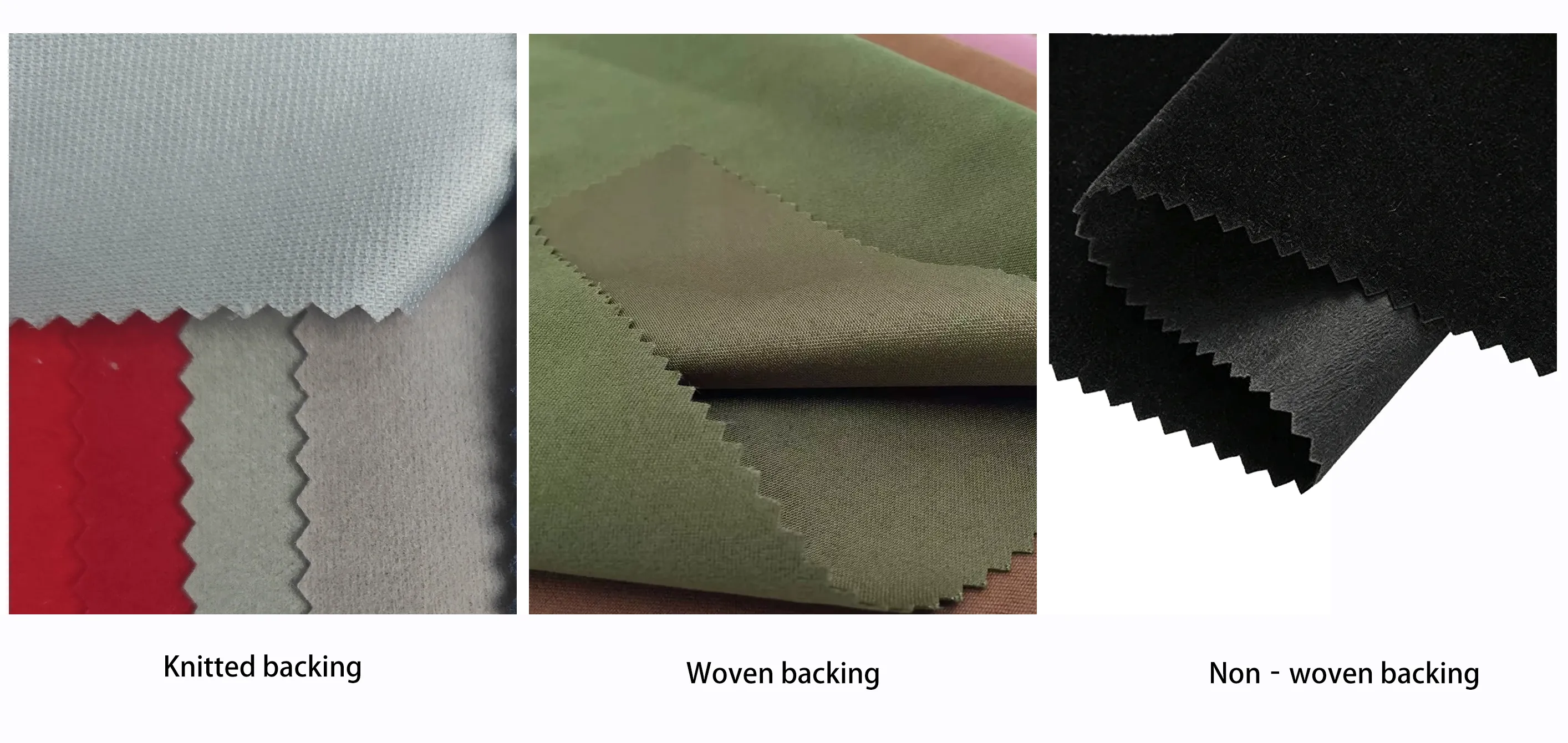
Velvet backing: Knitted backing, Woven backing, Non‑woven backing
Pile Height
Pile height affects feel and durability.
- Short pile (<3mm): Dense and durable, resistant to matting. Good for retail bags used frequently. Scratching is less visible.
- Long pile (>3mm): Luxuriously plush with high sheen, but the pile crushes over time and attracts fine dust. Best for high‑end gift packaging (single or very low usage).
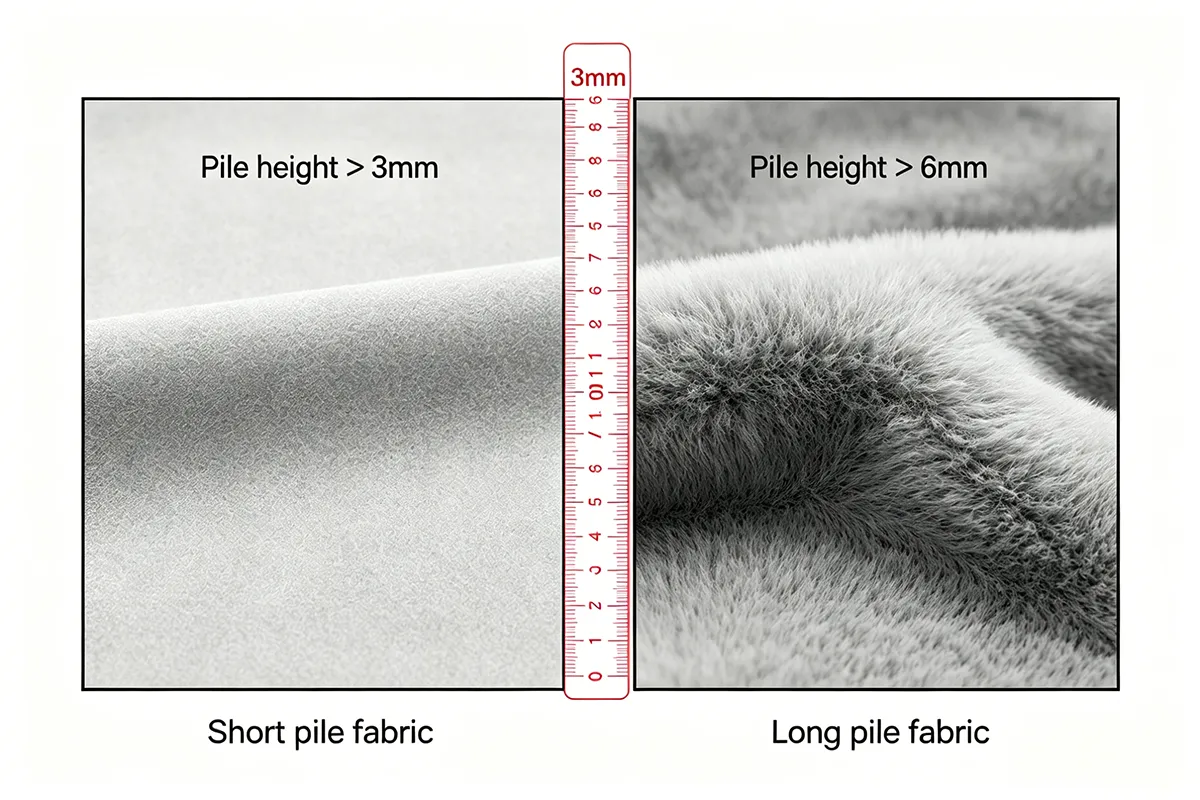
Pile height affects feel and durability
Fiber Composition
Fiber determines eco‑friendliness, cost, and biodegradability.
- Natural fibers (cotton velvet, silk velvet): Biodegradable, skin‑friendly, eco‑friendly but costly and less colorfast.
- Synthetic fibers (polyester velvet, nylon velvet): Low cost, bright colors, easy to wash but non‑biodegradable and can generate static electricity (attracts dust).
- Blends (cotton+polyester): Balance between performance and cost – the most common choice for jewelry pouches. Recommend at least 30% cotton content.
Real sourcing case: A mid‑luxury silver jewelry brand initially used long‑pile polyester velvet drawstring bags. Customers complained that black lint stuck in the crevices of the silver pieces and was hard to remove. We recommended switching to short‑pile, woven‑backed, blended velvet (70% polyester + 30% cotton), which reduced static cling, kept softness, and cut complaints by 90%.
Overview of the Three Classification Dimensions for Velvet
Velvet can be categorized along three dimensions. Each dimension will be covered in separate in‑depth articles. Click the links for details.
| Dimension | Description | Typical Types | Deep‑dive article |
| By fiber |
Natural vs. synthetic vs. blend |
Silk velvet, cotton velvet, polyester velvet, nylon velvet |
➡️ Natural vs. Synthetic Velvet: Eco‑Friendliness & Performance Compared |
| By backing/construction |
Knitted, woven, warp‑knit |
Knitted‑back velvet, woven‑back velvet, tricot velvet |
➡️ Knitted vs. Woven Backing: Which is Better for Your Drawstring Bag? |
| By market trade name |
Commercial names and their actual materials |
Velveteen (polyester/cotton), Korean velvet (polyester), flannel (cotton), short‑pile velvet, chenille |
➡️ Decoding Trade Names: What’s the Real Difference Between Velveteen, Korean Velvet, and Flannel? |
Quick Decision Framework
Follow the decision tree below to select the most suitable velvet type based on your core needs.
- Is budget your primary concern?
- Yes → Polyester short‑pile velvet (knitted backing): low cost, wide color range, good for promotions or large‑volume giveaways.
- No → go to step 2.
- Is your product high‑gloss or very soft metal (easily scratched)?
- Yes → Woven‑backed short‑pile blended velvet: dense pile and stable backing give the best scratch resistance.
- No → go to step 3.
- Does your brand emphasize eco‑friendliness and biodegradability?
- Yes → Natural velvet (cotton or silk): higher cost, skin‑friendly feel.
- No → go to step 4.
- Are you pursuing ultimate luxury feel and appearance?
- Yes → Long‑pile silk velvet or high‑quality velveteen: perfect for limited editions or holiday gift boxes.
- No → go to step 5.
- Medium budget, good hand feel and durability required?
- → Korean velvet (polyester short‑pile, woven backing) or short‑pile blended velvet: the most mainstream and cost‑effective choice.
Summary
Choosing the right velvet is not about picking the most expensive option – it’s about matching your product category, brand positioning, and budget. The classification framework, key metrics, and decision tree above will help you complete 80% of your selection work.
To dive deeper into sampling details or custom finishing for specific velvet fabrics, please read our dedicated articles.
Original technical comparison. Data are based on industry standard references. Actual product performance should be verified with your supplier’s samples.
Recommended Further Reading:
 We like to do design according to all the customers' requirements, or offer them our new designs. With strong OEM/ODM capabilities, we can fill your sourcing demands.