The choice of wrapping material for a jewelry box is, at its core, a visual manifestation of brand positioning. With a wide range of materials available—leather, paper, and fabric each offering distinct advantages—buyers are often faced not with a shortage of options, but with an overwhelming abundance of choices.
This article does not repeat the definitions of individual wrapping materials (please refer to our Complete Guide to Lamination Materials for Rigid Boxes at the end). Instead, it focuses on "how to choose based on your brand positioning." As a professional rigid jewelry boxes manufacturer, we understand that the right material makes packaging the brand's best ambassador—while the wrong choice can undermine even the finest design. As your trusted custom jewelry box manufacturer, this guide will help you navigate the vast landscape of jewelry packaging supplies and find the perfect "outer garment" for your brand.
1. Brand Suitability Comparison of the Three Wrapping Material Categories
The table below compares paper, leather, and fabric wrapping materials across six dimensions: brand tone, price range, customer psychology, customization options, durability, and unboxing experience.
| Dimension | Paper-Wrapped | Leather-Wrapped | Fabric-Wrapped |
|---|
| Brand Tone | Refined, luxurious, print-friendly | Premium, corporate, sophisticated | Warm, soft, emotionally resonant |
| Price Range | Broad (low to high) | Mid-high to high | Mid-high |
| Customer Psychology | Visual appeal | Quality & durability | Tactile & emotional connection |
| Customization Options | Full range (foil stamping, UV, embossing, screen printing, lamination) | Foil stamping / debossing | Foil stamping / embroidery / woven labels |
| Durability & Maintenance | Prone to scratches, not water-resistant | Wear-resistant, easy to clean | Requires stain and moisture protection |
| Unboxing Experience | Strong visual impact | Sophisticated, premium feel | Warm, inviting, tactile |
Professional tip: Paper-wrapped rigid boxes feel substantial when laminated onto greyboard. Pairing with short-pile velvet or microsuede linings adds softness while maintaining scratch resistance. Greyboard wrapped with paper offers the most cost-effective solution, with diverse textures and printing techniques enabling a wide range of visual effects.
2. Brand Positioning Recommendation Matrix
Luxury Brands (High-Premium Positioning)
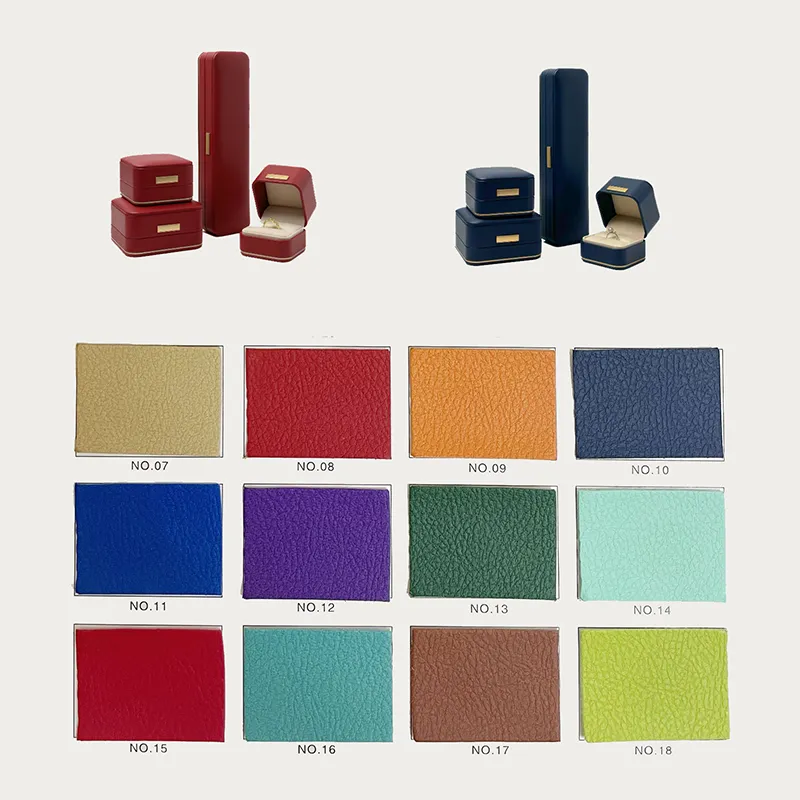
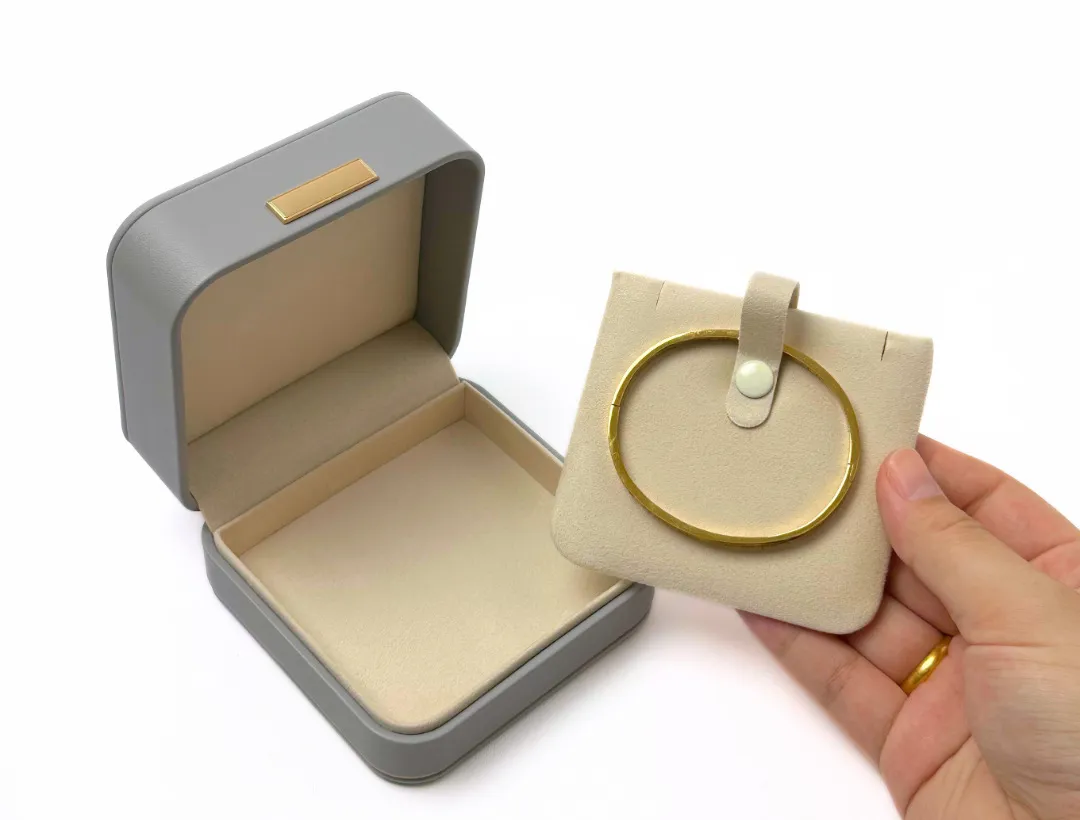
Recommended Materials: Genuine leather wrapping or microfiber leather wrapping + foil-stamped logo
Rationale: The natural grain and warm touch of genuine leather (or high-quality microfiber) are irreplaceable in conveying "prestige, heritage, and exclusivity." For fine jewelry and watch brands, quality takes precedence over cost. Foil stamping on leather presents a refined, understated elegance that aligns perfectly with the "quiet luxury" aesthetic.
Accessible Luxury Brands (Mid-to-High Positioning)
Recommended Materials: PU leather wrapping (cost-effective, wide color and texture selection) or premium specialty paper + foil stamping/embossing
Rationale: PU leather balances aesthetics and durability, offering numerous colors and textures at a controlled cost. Premium specialty papers, combined with foil stamping and embossing, can achieve a near-luxury feel. This segment requires balancing quality and cost—PU leather and specialty paper are ideal choices.
Fashion-Forward / Design-Driven Brands
Recommended Materials: Specialty/art paper wrapping + rich print and post-press finishing (UV, embossing, foil stamping combinations)
Rationale: Specialty papers already feature rich textures or metallic sheen. When combined with UV coating, embossing, and foil stamping, they create striking visual impact and strong brand recognition. For these brands, the core competitive advantage is "being seen"—and paper wrapping offers the broadest creative canvas.
Eco-Conscious / Natural Style Brands
Recommended Materials: Recycled paper/kraft paper wrapping or cotton/linen fabric wrapping
Rationale: Recycled paper and kraft paper convey a rustic, sustainable brand ethos; cotton/linen fabrics emphasize natural texture and warmth. The material itself tells the brand story—for brands prioritizing ESG and sustainable fashion, choosing eco-friendly materials is not just a cost decision, but an expression of values.
Gift / Emotionally-Driven Brands
Recommended Materials: Velvet/fabric wrapping
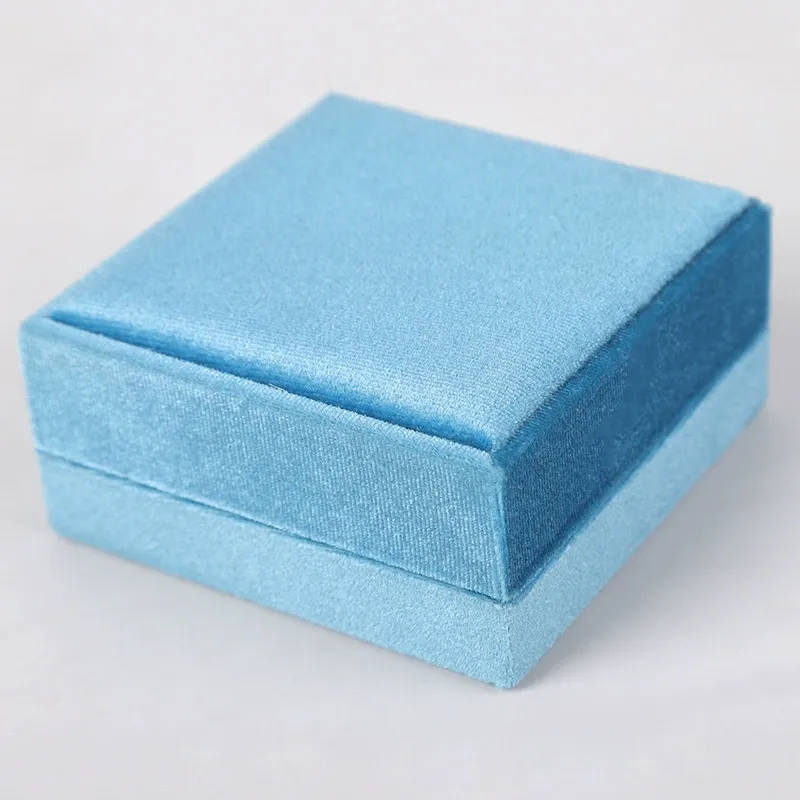
Rationale: Velvet (velvet, short plush) offers an exceptionally luxurious hand feel; fabric-wrapped boxes provide a unique tactile warmth and delicacy. For gift and emotional brands, the unboxing tactile experience is the emotional connection between brand and consumer—warm, soft, and inviting to touch.
3. Procurement Decision Checklist
Before finalizing your material direction, complete this self-assessment:
- What is your product's retail price point? → Determines your packaging budget range. Industry benchmark: jewelry packaging typically accounts for 2%-6% of retail price.
- Is your brand's core appeal visual, tactile, or eco-conscious? → Determines material direction. Visual → paper, Tactile → fabric/leather, Eco → recycled paper/cotton-linen.
- What unboxing experience does your target customer expect? → Determines material grade. Surprise & delight → paper + rich finishing, Sophisticated premium → leather, Warm & inviting → fabric.
- Does your packaging need to "stand out" on the shelf? → Determines whether rich printing is needed. Yes → paper (4-color + foil + UV), No → leather/fabric.
- Does your packaging need to be reusable or long-lasting? → Determines durability requirements. Yes → leather (wear-resistant, easy to clean) or high-quality fabric, No → paper.
4. Quality Control Checkpoints for Wrapping Processes
Regardless of material choice, the quality of the wrapping process itself is the final "bottom line." As a professional luxury jewelry box manufacturer, we focus on these five critical checkpoints:
- Edge wrapping: Smooth, rounded, and full—no sharp ridges, complete material-to-board adhesion
- Seams: Flat and even—no wrinkles, overlaps, or gaps
- Adhesive: No bleed-through, no bubbles on the surface, no glue residue at edges
- Surface integrity: Leather unscratched, paper uncreased, fabric unsnagged
- Consistent hand feel: Uniform firmness across all faces—no hollow spots or loose areas
5. Conclusion: No "Best" — Only "Most Suitable"
There is no single "best" wrapping material—only the one most suitable for your brand. The key lies in matching brand positioning with material characteristics. A silver jewelry brand targeting young, fashion-forward consumers may achieve better results with specialty paper and UV finishing than with genuine leather; while a heritage fine jewelry house will find leather's warm, supple texture irreplaceable.


 We like to do design according to all the customers' requirements, or offer them our new designs. With strong OEM/ODM capabilities, we can fill your sourcing demands.