As a jewelry packaging consultant, I’ve guided countless brands through a deceptively simple question: “Should I use rigid boxes or paper boxes for my jewelry line?” The answer goes far beyond aesthetics—it touches on cost structure, brand perception, supply chain efficiency, and customer experience. In this comprehensive analysis, I’ll break down the differences across five critical dimensions and provide actionable guidance to help you make the right choice.
Cost: Balancing Unit Price with Value Creation
Rigid Jewelry Boxes: Higher Investment, Higher Perceived Value
Rigid jewelry boxes are constructed using thick grayboard (typically 1.5mm–3mm) wrapped in specialty paper such as textured paper, linen paper, or silk-feel paper. The interior is fitted with custom-molded EVA or polyurethane foam. The manufacturing process involves die-cutting, hand-assembly, and lamination—making it labor-intensive. When partnering with a professional rigid jewelry boxes manufacturer, unit costs typically range from $0.70 to $4.50 depending on customization level and order volume.
Importantly, this cost functions as an investment. Industry research indicates that jewelry packaged in rigid boxes is perceived as 30–40% more valuable by consumers. For high-ticket items like engagement rings—where the packaging cost may represent just 0.5–2% of retail price—the return comes in the form of enhanced brand perception, higher conversion rates, and increased customer loyalty.
Paper Jewelry Boxes: Cost-Effective Solutions for High Volumes
Paper jewelry boxes are typically constructed from 250gsm–400gsm cardstock or lightweight paperboard. They are manufactured through automated processes: die-cutting, creasing, and gluing in a single production line. When sourcing through paper jewelry boxes wholesale channels, unit costs can drop to $0.07–$0.40 for orders exceeding 10,000 units.
However, low unit cost does not always translate to overall savings. Paper boxes offer limited structural protection. For jewelry items weighing over 30 grams or featuring sharp prong settings, damage rates during shipping can reach 3–5%. This translates to higher return rates and customer service costs that must be factored into total cost of ownership.
Tactile Experience: The Psychology of First Contact
Rigid Jewelry Boxes: The Ritual of Unboxing
When a customer lifts a rigid jewelry box, the first sensation is weight—typically 150g to 300g for an empty box, five to eight times heavier than a paper counterpart. This tactile feedback triggers a subconscious association with “preciousness” and “quality.” Opening a magnetic-closure rigid box reveals a precisely fitted interior where the
jewelry sits securely, creating a cohesive luxury unboxing experience.
From a craftsmanship perspective, rigid boxes accommodate advanced finishing techniques: full-surface foil stamping, embossing depths up to 1mm, and perfectly clean edge trimming. These details are difficult—if not impossible—to achieve with paper boxes.
Paper Jewelry Boxes: Lightweight and Eco-Conscious Appeal
Paper boxes offer a distinctly different sensory experience. For sterling silver, fashion jewelry, or acrylic pieces, a lightweight box can feel appropriate rather than underwhelming. Through techniques such as matte lamination, spot UV coating, and subtle foil stamping, paper boxes can achieve a clean, modern aesthetic.
One limitation is durability. Paper boxes typically withstand 10–15 opening/closing cycles before visible wear appears at crease lines. In environments with humidity above 70%, structural rigidity can decrease by approximately 20% within three months. For brands that expect customers to retain the packaging long-term, this is a relevant consideration.
Protection: Physical Security During Transit and Use
Rigid Jewelry Boxes: The Standard for Fine Jewelry
Engagement rings and other fine jewelry present unique protection challenges: protruding prongs, delicate pave settings, and high-value stones that cannot risk movement. Specialized ring box manufacturers address this by offering custom-molded interiors with tolerances as tight as ±0.3mm, ensuring the piece remains completely immobile.
In compression testing, rigid boxes typically withstand static loads exceeding 80kg without deformation. By comparison, paper boxes of similar dimensions begin to collapse under loads of 30kg or more. For international shipping or any logistics chain involving multiple handling points, rigid boxes provide a level of security that paper cannot match.
Paper Jewelry Boxes: Suitable for Lightweight Items
Paper boxes are well-suited for jewelry weighing under 20 grams with no sharp protrusions. Examples include fine chain necklaces, stud earrings, and beaded bracelets. Interior protection typically consists of paper cardstock inserts or thin foam pads.
For e-commerce fulfillment, even when using paper boxes, I strongly recommend additional outer protection such as bubble mailers or corrugated shippers. Paper boxes lack inherent moisture resistance, and exposure to rain or condensation during transit can compromise structural integrity.
Storage and Logistics: Space Efficiency vs. Damage Prevention
Rigid Jewelry Boxes: Fixed Dimensions, Lower Damage Rates
Rigid boxes are shipped in their finished form—they cannot be flattened. A standard ring box occupies approximately 0.0008m³. A 20-foot shipping container holds approximately 25,000 units. When sourcing from an overseas rigid jewelry boxes manufacturer, freight costs are calculated largely on dimensional weight, which often exceeds actual weight by a factor of two to three.
However, rigid boxes offer a significant advantage in fulfillment: they arrive ready to use. No assembly labor is required, and defect rates typically remain below 0.5%. For high-volume e-commerce operations, this predictability can offset higher per-unit freight costs.
Paper Jewelry Boxes: Maximizing Storage Density
Paper boxes are shipped flat, reducing storage volume by 70% or more compared to assembled rigid boxes. One thousand flat-packed paper boxes occupy roughly the same space as 100 assembled rigid boxes. For drop-shipping operations or brands with limited warehouse space, this efficiency is compelling.
The trade-off is assembly labor. Based on industry benchmarks, a skilled worker can assemble 150–200 paper boxes per hour. For operations shipping 1,000 orders daily, assembly requires approximately 5–7 dedicated staff hours per day—a labor cost that should be included in total expense calculations.
Brand Positioning: Packaging as a Silent Salesperson
Rigid Jewelry Boxes: The Language of Luxury
Globally, heritage jewelry brands—from Tiffany & Co.’s robin’s egg blue to Cartier’s signature red—have established rigid boxes as the visual shorthand for fine jewelry. This is no coincidence. Rigid packaging communicates “this is worth keeping.” When customers invest in engagement rings or heirloom-quality pieces, they expect a presentation that reflects the significance of the purchase.
For emerging brands seeking to establish premium positioning, adopting rigid boxes signals to customers that the brand takes quality seriously and expects the product to be treasured.
Paper Jewelry Boxes: Aligning with Modern Values
The rise of direct-to-consumer jewelry brands has brought renewed attention to paper packaging. Many of these brands emphasize “everyday luxury” and “accessible elegance,” positioning their products as items to be worn frequently rather than stored in boxes. In this context, simple, sustainable packaging aligns with brand messaging.
Paper boxes also offer advantages in sustainability communications. Using FSC-certified paper and biodegradable coatings allows brands to highlight environmental responsibility—a meaningful differentiator for younger demographics who may view excessive packaging negatively.
At-a-Glance Summary: Five Dimensions Compared
| Dimension
| Rigid Jewelry Boxes
| Paper Jewelry Boxes
|
|---|
| Unit Cost
| $0.70–$4.50 (including custom inserts)
| $0.07–$0.40 (flat-packed)
|
| Tactile Experience
| 150–300g weight, magnetic closure, advanced foil/embossing
| 30–80g weight, folding structure, matte/UV finishes
|
| Protection
| 80kg+ compression resistance, precision foam inserts
| <30kg compression, suitable for lightweight non-sharp items
|
| Storage & Logistics
| Fixed shape, higher dimensional weight, <0.5% damage rate
| Flat-packed for storage, assembly required, 3–5% damage potential
|
| Brand Positioning
| Fine jewelry, engagement rings, heirloom pieces
| Fashion jewelry, entry-level price points, promotional items
|
| Recommended Retail Price
| $300+
| Under $70
|
Selection Guide: A Three-Step Framework
Step 1: Follow Your Price Point
For items priced above $300, particularly engagement rings or pieces with precious stones:
Select rigid jewelry boxes without exception. Partner with established ring box manufacturers that offer custom foam molding to ensure each piece is held securely. This is not an area for compromise—the cost of replacing a damaged fine jewelry piece far exceeds any packaging savings.
For items priced under $70, or fashion jewelry, sterling silver, and promotional items:
Paper jewelry boxes wholesale channels offer the most cost-effective supply chain. Specify cardstock weights of 300gsm or higher, and consider matte lamination or foil stamping to elevate perceived quality while maintaining affordability.
Step 2: Consider Your Sales Channels
Physical retail (boutiques, department stores, pop-ups):
Prioritize rigid boxes. Customers interact with packaging directly in-store, and tactile quality influences purchase decisions at the point of sale.
E-commerce (direct-to-consumer, marketplace):
If using rigid boxes, ensure outer shipping cartons include sufficient void fill. If using paper boxes, add an outer protective layer (bubble mailer or corrugated shipper) and factor a 3–5% buffer for in-transit damage.
Step 3: Align with Brand Identity
Brands positioning for “classic,” “heritage,” or “heirloom” appeal:
Rigid boxes are essential. Consider structural variations such as book-style or drawer-style boxes to further differentiate your brand.
Brands emphasizing “sustainable,” “everyday,” or “accessible luxury”:
High-quality paper boxes can effectively communicate these values. Consider using specialty paper wraps or magnetic-closure folding boxes to bridge the gap between cost efficiency and elevated presentation.
- Case Study: From “Prestige” to “Practicality”—A Packaging Awakening
A pearl jewelry designer started her business with rigid boxes—2mm grayboard, foil-stamped logo, and a blue exterior reminiscent of a famous luxury brand. The unit cost was $3.20, and the quality was impeccable. But two issues emerged: storage pressure (rigid boxes don’t flatten, driving up warehouse rent) and misaligned value—her average order value was only $70–$110, and most customers discarded the elaborate boxes after receiving them.
“The box feels too grand for my pearls,” one loyal customer told her during a feedback session. “It’s almost intimidating.”
That comment made her rethink everything. Was rigid packaging truly serving her brand?
She made a bold decision—to switch entirely to paper boxes. She chose 350gsm cardstock folding boxes with matte lamination, secured the pearls with paper cardstock inserts, and cut unit costs from $3.20 to $0.35. Just as importantly, flat-packed paper boxes reduced her warehouse footprint by 60% and lowered shipping costs due to reduced dimensional weight.
After launching the new packaging, the “downgrade” she feared never materialized. Instead, customer reviews began highlighting words like “eco-friendly,” “lightweight,” and “just right.” Her repurchase rate climbed from 12% to 24%.
“I used rigid boxes to make people think I was expensive,” she later shared. “Now I use paper boxes to let customers feel this is who I really am. Packaging isn’t about being heavier—it’s about being the right fit.”
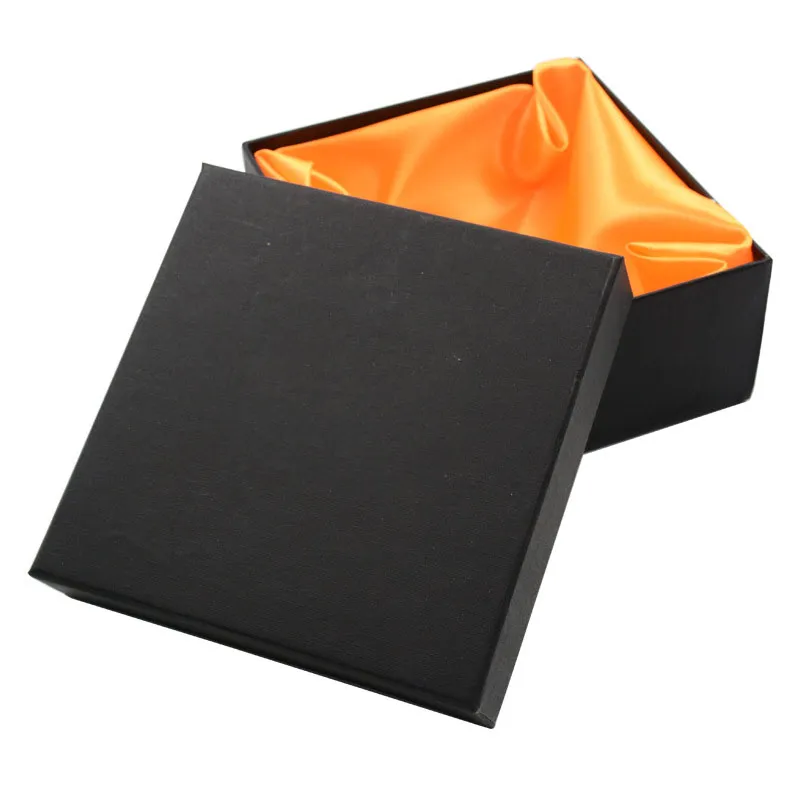
This case illustrates a crucial point: neither rigid nor paper boxes are inherently superior. The right choice depends entirely on alignment with brand positioning, price point, and operational capacity. When packaging grandeur exceeds what the product or customer experience requires, it can become a liability rather than an asset.
Frequently Asked Questions (FAQ)
Q1: Are rigid jewelry boxes suitable for e-commerce shipping? Won’t they increase shipping costs significantly?
A: Rigid boxes are absolutely suitable for e-commerce. While dimensional weight charges are higher compared to paper boxes, the extremely low damage rate (typically below 0.5%) reduces returns and customer service costs. For fine jewelry, this trade-off is generally favorable. When shipping, use an outer carton 2–3cm larger than the rigid box and add bubble cushioning or air pillows.
Q2: Can paper jewelry boxes accommodate foil stamping and custom inserts?
A: Foil stamping is possible on paper boxes, but limitations exist. Due to paper thickness, large-area foil stamping may show creasing, and embossing depth is limited compared to rigid boxes. For interior protection, paper boxes typically rely on paper cardstock inserts or thin foam pads. If your product requires precise, non-movement positioning, consider upgrading to light rigid boxes (thin grayboard construction) as a mid-tier option.
Q3: Can a brand use both rigid and paper boxes across different product lines?
A: Yes, and this is a common and sensible approach. Many brands use rigid boxes for bridal and fine jewelry collections while using paper boxes for fashion jewelry and promotional items. The key is maintaining consistent visual branding (colors, logo placement, finishing details) so the packaging family remains recognizable even across different material tiers.
Q4: What are typical lead times and minimum order quantities for rigid jewelry boxes?
A: When working with a reliable rigid jewelry boxes manufacturer, standard lead times range from 25 to 35 days, including mold creation, sampling, and production. Minimum order quantities typically range from 1,000 to 3,000 units, though some manufacturers accommodate smaller runs at higher unit prices. I recommend placing orders at least 60 days before peak seasons to allow for sampling and any necessary adjustments.
In the world of jewelry packaging, there is no universally “correct” choice—only the choice that aligns with your product, your price point, and your brand’s relationship with your customers. Rigid boxes and paper boxes serve different purposes, and each has a rightful place in the market. My advice as a consultant is straightforward: let your packaging reflect the value of what’s inside, and treat every unboxing as an opportunity to deepen the connection between your brand and your customer.
Recommended Further Reading:

 We like to do design according to all the customers' requirements, or offer them our new designs. With strong OEM/ODM capabilities, we can fill your sourcing demands.